Managing cloud costs can feel like navigating a maze—until you discover the Azure Cost Calculator. This powerful tool puts you in control, helping you forecast, optimize, and master your Microsoft Azure spending with precision and confidence.





What Is the Azure Cost Calculator?

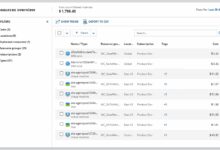
The Azure Cost Calculator is an essential online tool provided by Microsoft to help businesses, developers, and IT professionals estimate the cost of using Azure cloud services before deployment. It allows users to build a customized cloud infrastructure model and receive real-time pricing estimates based on their specific configuration choices.
How the Azure Cost Calculator Works
The calculator operates on a modular system, letting users select from a vast array of Azure services such as virtual machines, storage, networking, databases, and AI tools. Each selection updates the total estimated monthly or hourly cost dynamically.
- Users choose regions, service tiers, and instance types.
- They can adjust quantities, usage hours, and data transfer volumes.
- The tool applies current pricing, including discounts like Reserved Instances or Spot pricing where applicable.
This real-time feedback loop makes it easy to experiment with different architectures and understand cost implications instantly.
Key Features of the Azure Pricing Calculator
Microsoft has designed the Azure Cost Calculator with usability and accuracy in mind. It includes several standout features that set it apart from basic pricing tools.
- Service Filtering: Easily search and filter services by category (e.g., Compute, Networking, AI).
- Region Selection: Compare pricing across 60+ global Azure regions.
- Export Options: Download estimates as CSV or PDF for sharing with stakeholders.
- Integration with TCO Calculator: Link your estimate to the Total Cost of Ownership (TCO) tool for on-premises vs. cloud comparisons.
“The Azure Cost Calculator is not just a number generator—it’s a strategic planning tool that empowers teams to make financially intelligent cloud decisions.” — Microsoft Azure Documentation
Why Use the Azure Cost Calculator?
One of the biggest challenges in cloud adoption is unpredictable spending. Without proper planning, companies can face unexpected bills that erode ROI. The Azure Cost Calculator eliminates guesswork by providing transparent, detailed cost projections.
Prevent Cloud Cost Overruns
According to a 2023 report by Flexera, 32% of enterprise cloud spending is wasted due to poor planning and idle resources. The Azure Cost Calculator helps prevent this by forcing users to think critically about their architecture before deployment.
- It highlights expensive configurations early.
- Encourages optimization through comparison (e.g., choosing between Standard and Premium SSDs).
- Supports scenario testing—what if we use 3 VMs instead of 5?
By simulating different setups, teams can identify the most cost-effective solutions without deploying a single resource.
Support Strategic Decision-Making
Finance, IT, and executive teams all benefit from the clarity the Azure Cost Calculator provides. It serves as a common language between technical and non-technical stakeholders.
- IT teams can justify infrastructure choices with hard numbers.
- Finance departments gain visibility into projected OpEx.
- Executives can assess cloud ROI before approving budgets.
This alignment reduces friction and accelerates cloud adoption with confidence.
Step-by-Step Guide to Using the Azure Cost Calculator
Using the Azure Cost Calculator doesn’t require technical expertise, but following a structured approach ensures accurate and useful results. Here’s how to get the most out of it.
Step 1: Access the Tool
Visit the official Azure Pricing Calculator page. No login is required to start building estimates, though saving or sharing requires a Microsoft account.
- The interface is clean and intuitive.
- A search bar helps locate specific services quickly.
- Categories are clearly labeled on the left sidebar.
Begin by clicking “+ Add” to start adding services to your estimate.
Step 2: Build Your Cloud Environment
Think of this step as designing your dream cloud setup—but with a budget in mind. Start by selecting core components like compute, storage, and networking.
- Compute: Choose Virtual Machines (VMs), Azure App Service, or Azure Functions.
- Storage: Add Blob Storage, Disk Storage, or Data Lake.
- Networking: Include Load Balancers, VPN Gateways, or Azure DNS.
For each service, specify details such as:
- Instance size (e.g., B2s, D4s_v3)
- Region (e.g., East US, West Europe)
- Usage hours per month (default is 730, representing 24/7)
- Number of instances
The calculator updates the total cost in real time as you make changes.
Step 3: Optimize and Compare Scenarios
One of the most powerful aspects of the Azure Cost Calculator is its ability to support what-if analysis. Create multiple versions of your setup to compare costs.
- Scenario A: 5 VMs running 24/7
- Scenario B: 3 VMs with auto-scaling
- Scenario C: Serverless architecture using Azure Functions
Use the “Save Estimate” feature to store different configurations. You can then download and present these to decision-makers.
Tip: Use the “Monthly Cost” vs. “Hourly Cost” toggle to understand usage patterns and identify peak spending times.
Advanced Features of the Azure Cost Calculator
Beyond basic cost estimation, the Azure Cost Calculator offers advanced functionalities that cater to enterprise-level planning and financial forecasting.
Reserved Instance Discounts
The calculator automatically applies potential savings when you configure Reserved Instances (RIs) for services like VMs and SQL Database. RIs offer up to 72% savings compared to pay-as-you-go pricing.
- Select the “Reserved” option under VM configuration.
- Choose a term: 1-year or 3-year commitment.
- See the discounted monthly rate and total savings.
This feature is crucial for long-term projects where resource usage is predictable.
Spot VM Pricing Integration
For non-critical, fault-tolerant workloads, Spot VMs can reduce compute costs by up to 90%. The Azure Cost Calculator includes a toggle to enable Spot pricing.
- Available under VM configuration settings.
- Clearly displays the reduced hourly rate.
- Warns that these VMs can be evicted during capacity shortages.
This allows teams to assess risk vs. reward when considering cost-sensitive workloads.
Hybrid Benefit and Licensing Options
If your organization has existing Windows Server or SQL Server licenses with Software Assurance, you can apply the Azure Hybrid Benefit to reduce costs.
- Enable the “Azure Hybrid Benefit” toggle in the VM or database settings.
- The calculator adjusts the price to reflect licensing savings.
- This can lead to significant reductions, especially for enterprise-grade databases.
This integration ensures that on-premises investments are not wasted during cloud migration.
Integrating the Azure Cost Calculator with Other Tools
The Azure Cost Calculator doesn’t exist in isolation. It works best when combined with other Microsoft tools for comprehensive cost management.
Linking to the Azure TCO Calculator
The TCO Calculator helps organizations compare the cost of running workloads on-premises versus in Azure. You can directly import your Azure Cost Calculator estimate into the TCO tool.
- It factors in hardware, power, cooling, IT labor, and downtime.
- Generates a detailed report showing potential savings over 3-5 years.
- Helps build a business case for cloud migration.
This integration is invaluable for CIOs and CFOs evaluating digital transformation initiatives.
Connecting with Azure Cost Management + Billing
Once your resources are live, the Azure Cost Management + Billing service takes over. While the Cost Calculator is for forecasting, Cost Management is for monitoring and controlling actual spend.
- Set budgets and receive alerts when thresholds are exceeded.
- Analyze spending by service, department, or tag.
- Identify idle or underutilized resources.
Using both tools together creates a closed-loop system: plan with the calculator, monitor with Cost Management.
Exporting Data for Financial Planning
The ability to export your cost estimate is a game-changer for financial teams. The Azure Cost Calculator supports:
- CSV export for integration with Excel or financial modeling tools.
- PDF export for presentations and stakeholder reviews.
- Direct sharing via link (requires Microsoft account).
This makes it easy to include cloud cost projections in capital expenditure (CapEx) or operational expenditure (OpEx) reports.
Common Mistakes When Using the Azure Cost Calculator
Even with a powerful tool like the Azure Cost Calculator, users can make errors that lead to inaccurate estimates. Being aware of these pitfalls can improve forecasting accuracy.
Ignoring Data Transfer Costs
One of the most overlooked expenses is data transfer. While inbound data is free, outbound data (especially to the internet or cross-region transfers) can add up quickly.
- Always specify expected egress volume in the Networking section.
- Consider using Azure CDN to reduce egress fees.
- Factor in backup and replication traffic.
For example, transferring 10 TB of data out to the internet can cost over $100/month depending on the region.
Overprovisioning Resources
It’s tempting to choose high-performance VMs “just in case,” but this leads to unnecessary costs. The calculator makes it easy to test smaller instances.
- Start with lower-tier VMs and scale up only if needed.
- Use Azure Advisor recommendations post-deployment.
- Consider autoscaling to handle traffic spikes efficiently.
Overprovisioning can inflate costs by 200% or more without delivering proportional performance gains.
Forgetting Support and Management Tools
Many estimates focus only on core infrastructure but neglect operational tools like Azure Monitor, Log Analytics, or Backup services.
- These services add value but also cost.
- Include them in your estimate for a complete picture.
- Factor in support plans (Basic, Developer, Standard, Professional Direct).
A comprehensive estimate should reflect not just runtime costs, but also management and monitoring expenses.
Best Practices for Maximizing the Azure Cost Calculator
To get the most value from the Azure Cost Calculator, follow these proven best practices used by cloud architects and financial planners.
Start with a Clear Workload Definition
Before opening the calculator, define your workload requirements: expected users, data volume, uptime needs, and compliance requirements.
- Document CPU, memory, and storage needs.
- Estimate traffic patterns (peak vs. average).
- Identify dependencies (e.g., database, caching layer).
This preparation ensures your estimate is grounded in reality, not guesswork.
Leverage Tags for Cost Allocation
While the calculator doesn’t enforce tagging, planning for it early improves post-deployment cost tracking.
- Use tags like ‘Environment=Production’, ‘Department=Marketing’, ‘Project=CRM’.
- These can be mirrored in Azure Cost Management for detailed reporting.
- Helps allocate costs accurately across teams.
Think of tags as the foundation of financial accountability in the cloud.
Review and Update Estimates Regularly
Cloud needs evolve. A static estimate becomes outdated quickly.
- Revisit your calculator estimates quarterly.
- Adjust for scaling, new features, or technology changes.
- Compare forecasted vs. actual costs using Azure Cost Management.
This continuous improvement cycle ensures your financial planning stays aligned with business goals.
Real-World Use Cases of the Azure Cost Calculator
The Azure Cost Calculator isn’t just for large enterprises. Organizations of all sizes use it to plan and optimize their cloud investments.
Startup Launching a Web App
A tech startup planning to launch a SaaS product used the Azure Cost Calculator to model their initial infrastructure.
- Selected Azure App Service (Linux, B2 tier) for the frontend.
- Used Azure Database for PostgreSQL (Basic, 50 GB).
- Added Azure Blob Storage for user uploads.
The total estimated cost: $120/month. This helped them secure seed funding with a clear budget plan.
Enterprise Migrating Legacy Systems
A global bank migrating 50 on-premises servers to Azure used the calculator to build multiple migration scenarios.
- Compared lift-and-shift vs. refactored architectures.
- Applied Reserved Instance pricing for predictable workloads.
- Used the TCO integration to justify a $2.1M savings over 5 years.
The detailed estimates were presented to the board and approved within two weeks.
Educational Institution Hosting Online Courses
A university launching an online learning platform used the calculator to plan for seasonal traffic spikes.
- Designed a scalable architecture with Azure Virtual Machines and Azure CDN.
- Estimated costs for 10,000 concurrent users during exam periods.
- Used Spot VMs for batch processing of student submissions.
The final estimate helped them secure a grant and avoid budget overruns during peak usage.
What is the Azure Cost Calculator?
The Azure Cost Calculator is a free online tool from Microsoft that allows users to estimate the cost of Azure cloud services before deployment. It supports detailed configuration of compute, storage, networking, and other services to generate accurate pricing forecasts.
Is the Azure Cost Calculator accurate?
Yes, the Azure Cost Calculator uses real-time pricing data from Microsoft and is highly accurate for planning purposes. However, actual costs may vary slightly due to usage fluctuations, taxes, or unanticipated services. It’s best used as a forecasting tool, not a billing system.
Can I save my estimates in the Azure Cost Calculator?
Yes, you can save your estimates by signing in with a Microsoft account. Saved estimates can be edited, shared via link, or exported as CSV/PDF files for reporting and collaboration.
Does the Azure Cost Calculator include taxes and discounts?
The calculator shows pre-tax estimates by default. Users can manually adjust for taxes. It does include available discounts like Reserved Instances, Spot pricing, and Azure Hybrid Benefit when configured.
How is the Azure Cost Calculator different from Azure Cost Management?
The Azure Cost Calculator is for forecasting costs before deployment, while Azure Cost Management is for monitoring and controlling actual spending after resources are live. They are complementary tools in the cost optimization lifecycle.
Mastering the Azure Cost Calculator is a critical step toward cloud financial management excellence. It empowers organizations to plan with precision, avoid costly surprises, and make data-driven decisions. Whether you’re a startup, enterprise, or educational institution, this tool provides the clarity needed to harness Azure’s power without overspending. By combining accurate forecasting with ongoing monitoring, you can achieve true cloud cost optimization.
Recommended for you 👇
Further Reading: