Want to calculate Azure costs accurately and avoid surprise bills? You’re not alone. With Microsoft Azure’s vast array of services, understanding your spending can feel overwhelming—until now.


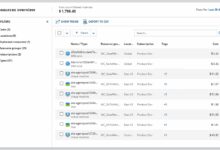



Why You Need to Calculate Azure Costs Accurately

Understanding your cloud expenditure isn’t just about budgeting—it’s about control, efficiency, and long-term scalability. As organizations increasingly migrate workloads to Microsoft Azure, the ability to calculate Azure costs becomes a critical skill for IT leaders, finance teams, and developers alike. Without proper cost visibility, companies risk overspending, underutilizing resources, or even facing compliance issues due to unmonitored usage.
The Hidden Risks of Ignoring Cloud Costs
Many businesses assume that moving to the cloud automatically reduces IT expenses. However, without proactive monitoring, cloud costs can spiral out of control. A virtual machine left running after hours, an unattached disk, or a misconfigured storage account can all lead to unnecessary charges. According to a 2023 report by Flexera, 32% of cloud spend is wasted due to idle resources and poor optimization.
- Unmonitored auto-scaling groups can launch expensive instances unnecessarily
- Orphaned resources like disks and snapshots continue to incur charges
- Lack of tagging leads to untraceable spending across departments
These hidden costs accumulate silently, making it essential to regularly calculate Azure costs and identify inefficiencies before they impact your bottom line.
Business Impact of Poor Cost Management
When cloud costs aren’t managed, the ripple effects extend beyond finance. Development teams may face restrictions on resource access, innovation slows down due to budget freezes, and CTOs lose strategic leverage in planning future initiatives. On the other hand, organizations that actively calculate Azure costs gain transparency, enabling data-driven decisions and better ROI on cloud investments.
“Cost management is no longer an IT afterthought—it’s a core business capability in the cloud era.” — Gartner, 2023
How to Calculate Azure Costs: Core Components Explained
To effectively calculate Azure costs, you must first understand the building blocks of Azure pricing. Unlike traditional on-premises infrastructure, Azure operates on a pay-as-you-go model with hundreds of services, each with its own pricing structure. Breaking down these components helps demystify the billing process and empowers teams to forecast and optimize spending.
Compute: The Heart of Your Azure Bill
Compute resources—such as Virtual Machines (VMs), Azure Kubernetes Service (AKS), and Azure Functions—are often the largest contributors to your monthly bill. VMs are priced based on instance type, region, and whether they run on Windows or Linux. For example, a D4s v3 Linux VM in East US costs approximately $0.192/hour, while the same instance with Windows OS jumps to $0.336/hour due to licensing fees.
To calculate Azure costs for compute, consider:
- Instance size and family (e.g., B-series for burstable, D-series for general purpose)
- Operating system and software licensing
- Uptime (per second billing after the first minute)
- Availability zones and redundancy options
You can use the Azure Pricing Calculator to estimate compute costs before deployment.
Storage: More Than Just Disk Space
Azure offers multiple storage tiers—Standard HDD, Standard SSD, and Premium SSD—each with different performance and pricing. Additionally, data transfer, API calls, and redundancy (LRS, ZRS, GRS) affect the final cost. For instance, storing 1 TB of data on Standard HDD in East US costs about $20/month, but transferring that data out to the internet incurs additional egress fees.
Key factors when you calculate Azure costs for storage:
- Storage tier and redundancy level
- Data ingress (usually free) vs. egress (charged)
- Access tier: Hot, Cool, or Archive (Archive is cheapest but has retrieval fees)
- Number of read/write operations (transactions)
Using Azure Blob Storage in Cool tier can reduce costs by up to 60% compared to Hot tier for infrequently accessed data.
Networking: The Silent Cost Driver
Networking costs are often overlooked but can significantly impact your bill. Azure charges for load balancers, virtual networks, DNS queries, and especially data transfer between regions or out to the internet. For example, transferring 1 TB of data from Azure East US to a user in Europe costs around $90, while intra-region traffic is free.
When you calculate Azure costs related to networking, consider:
- Bandwidth usage between regions and availability zones
- Public IP addresses (static vs. dynamic)
- Application Gateway and Azure Firewall usage
- ExpressRoute vs. VPN Gateway for hybrid connectivity
Optimizing data flow and using Content Delivery Network (CDN) can drastically reduce egress charges.
Top Tools to Calculate Azure Costs Efficiently
Microsoft provides several native tools to help you calculate Azure costs with precision. Leveraging these tools not only simplifies budgeting but also enables real-time monitoring and forecasting. Let’s explore the most effective ones.
Azure Pricing Calculator: Plan Before You Spend
The Azure Pricing Calculator is your first stop when estimating costs. It allows you to build a virtual environment by selecting services, regions, and configurations, then instantly see the projected monthly cost. You can save and share these estimates with stakeholders, making it ideal for pre-deployment planning.
Key features:
- Real-time cost estimation for over 100 Azure services
- Support for reserved instances and hybrid benefits
- Export options (PDF, CSV) for reporting
- Integration with Azure subscriptions for accurate comparisons
While powerful, the calculator is a projection tool—not a real-time billing system. Always validate estimates against actual usage.
Azure Cost Management + Billing
This is the most comprehensive tool to calculate Azure costs across subscriptions, resource groups, and departments. Integrated directly into the Azure portal, it provides detailed reports, budget alerts, and cost analysis dashboards.
With Azure Cost Management, you can:
- Track actual vs. forecasted spending
- Set custom budgets with email and SMS alerts
- Break down costs by tags (e.g., department, project, environment)
- Identify idle or underutilized resources
- Export data to Power BI for advanced analytics
One of its standout features is the Cost Analysis report, which visualizes spending trends over time and allows filtering by service, location, or resource type. This makes it easier to pinpoint cost anomalies and optimize accordingly.
“Azure Cost Management turns raw billing data into actionable insights.” — Microsoft Azure Documentation
Third-Party Tools: Enhanced Visibility and Automation
While Azure’s native tools are robust, third-party solutions offer deeper analytics, multi-cloud support, and automated optimization. Tools like CloudHealth by VMware, Datadog, and Apptio provide AI-driven recommendations, showback/chargeback models, and integration with financial systems.
Benefits of third-party tools:
- Cross-cloud cost comparison (Azure, AWS, GCP)
- Automated rightsizing and shutdown policies
- Advanced forecasting using machine learning
- Custom reporting for CFOs and auditors
However, these tools often come with additional licensing costs, so evaluate ROI before adoption.
Step-by-Step Guide to Calculate Azure Costs Manually
While tools automate much of the process, understanding how to calculate Azure costs manually gives you greater control and insight. This method is especially useful for auditing, training, or validating automated reports.
Step 1: Identify All Active Resources
Log into the Azure portal and navigate to Cost Management + Billing. From there, go to Cost Analysis and filter by subscription. Export a list of all running resources, including VMs, databases, storage accounts, and networking components.
Alternatively, use Azure CLI to list resources:
az resource list --output table
This gives you a clear inventory to work with.
Step 2: Gather Pricing Data
Visit the Azure pricing pages for each service. For example:
- Virtual Machines: azure.microsoft.com/pricing/details/virtual-machines
- Storage: azure.microsoft.com/pricing/details/storage
- SQL Database: azure.microsoft.com/pricing/details/sql-database
Note the hourly or monthly rates, data transfer costs, and any additional fees.
Step 3: Calculate Monthly Cost Per Resource
Use the formula:
Monthly Cost = (Hourly Rate) × (Hours in a Month)
For example, a B2s VM priced at $0.041/hour running 24/7:
$0.041 × 730 hours = $30.03/month
For storage, add base storage cost + transaction fees + egress charges. If you store 500 GB on Standard SSD ($0.078/GB/month) and transfer 100 GB out:
- Storage: 0.5 × $0.078 × 730 = $28.47
- Egress: 100 GB × $0.08/GB = $8.00
- Total: $36.47
Repeat this for every resource and sum the totals.
Advanced Strategies to Optimize and Reduce Azure Costs
Once you can accurately calculate Azure costs, the next step is optimization. These advanced strategies go beyond basic monitoring and help you save 30–50% on your monthly bill.
Use Reserved Instances for Predictable Workloads
Azure Reserved VM Instances (RIs) offer up to 72% savings compared to pay-as-you-go pricing. By committing to 1-year or 3-year terms, you lock in lower rates for specific VM sizes and regions.
Best practices:
- Reserve instances for production workloads with stable usage
- Use the Cost Management tool to analyze utilization and recommend reservations
- Consider Shared reservations across subscriptions for flexibility
- Combine with Hybrid Benefit if you have existing Windows Server licenses
For example, reserving a D4s v3 VM for 3 years can reduce costs from $280/month to $80/month—a 71% saving.
Implement Auto-Shutdown and Scaling Policies
Many development and testing environments run 24/7 unnecessarily. Use Azure Automation or DevTest Labs to schedule auto-shutdown during non-working hours.
Example: A team runs 5 D2s v3 VMs for testing. At $0.104/hour, running 24/7 costs $380/month per VM. By shutting down after hours (16 hours/day off), you save 66%, reducing cost to $127/month—saving $1,265/month for 5 VMs.
Similarly, configure auto-scaling for web apps and AKS clusters to scale down during low traffic.
Leverage Spot VMs for Fault-Tolerant Workloads
Spot VMs offer up to 90% discount on unused Azure capacity. They can be evicted when demand rises, making them ideal for batch processing, CI/CD pipelines, and stateless applications.
To calculate Azure costs with Spot VMs:
- Compare Spot price vs. regular price in your region
- Estimate eviction frequency (typically 5–10% per month)
- Factor in restart overhead and data persistence
Even with occasional restarts, the savings are substantial. A D4s v3 Spot VM costs ~$0.03/hour vs. $0.192/hour—85% cheaper.
Common Mistakes When Trying to Calculate Azure Costs
Even experienced teams make errors when calculating Azure costs. Avoiding these pitfalls can prevent budget overruns and improve forecasting accuracy.
Ignoring Egress and Data Transfer Fees
One of the most common mistakes is focusing only on compute and storage while ignoring data transfer costs. While inbound data is free, outbound data to the internet or between regions is charged. A single large data export can cost hundreds of dollars if not planned.
Solution: Always include egress estimates in your cost models. Use Azure Traffic Manager or CDN to reduce external transfers.
Overprovisioning Resources ‘Just in Case’
Teams often choose larger VM sizes than needed, assuming it’s safer. However, a D8s v3 is 4x more expensive than a D4s v3. Use Azure Monitor to track CPU, memory, and disk usage over time and rightsize accordingly.
Rule of thumb: If average CPU usage is below 40% for a week, consider downsizing.
Failing to Tag Resources
Without proper tagging (e.g., Project=CRM, Environment=Dev, Owner=JohnDoe), you can’t track spending by department or application. This makes it impossible to calculate Azure costs accurately at a granular level.
Best practice: Enforce tagging policies using Azure Policy. Require tags on all new resources and automate cleanup of untagged ones.
Best Practices for Ongoing Azure Cost Management
Calculating Azure costs isn’t a one-time task—it’s an ongoing process. Establishing best practices ensures long-term financial control and accountability.
Create and Monitor Budgets Regularly
Use Azure Budgets to set monthly limits and receive alerts at 50%, 75%, and 100% of usage. You can even trigger Azure Functions when thresholds are exceeded to auto-shutdown non-critical resources.
Tip: Set budgets at the resource group level for project-based tracking.
Conduct Monthly Cost Reviews
Hold regular finance-IT syncs to review cost reports, discuss anomalies, and plan optimizations. Use Power BI dashboards to visualize trends and share insights with leadership.
Train Teams on Cost-Aware Development
Developers should understand the cost implications of their architecture choices. Provide training on cost-efficient design patterns, such as using serverless for event-driven workloads or caching to reduce database calls.
Empower teams with access to Cost Management dashboards so they can monitor their own spending.
Future Trends in Azure Cost Management
The landscape of cloud cost management is evolving rapidly. Staying ahead of trends helps you calculate Azure costs more accurately and leverage new savings opportunities.
AI-Powered Cost Optimization
Microsoft is integrating AI into Cost Management to provide predictive analytics and automated recommendations. For example, AI can predict future spending based on historical trends and suggest optimal reservation purchases.
In 2024, Azure introduced Cost Management Advisor, which uses machine learning to detect idle resources and recommend rightsizing—reducing manual effort.
Carbon-Aware Cost Optimization
As sustainability becomes a priority, Azure is linking cost and carbon emissions. Running workloads in regions with lower energy costs and cleaner grids can reduce both expenses and environmental impact.
Future tools may allow you to calculate Azure costs alongside carbon footprint, enabling greener, cheaper operations.
FinOps Integration
The FinOps (Financial Operations) movement is gaining traction, blending finance, operations, and engineering to manage cloud costs collaboratively. Platforms like FinOps Foundation provide frameworks for accountability, showback, and continuous improvement.
Organizations adopting FinOps report 20–30% cost savings within the first year.
How do I start calculating my Azure costs?
Begin by accessing the Azure Cost Management + Billing section in the Azure portal. Use the Cost Analysis tool to view your spending by service, resource group, or tag. For future estimates, use the Azure Pricing Calculator to model your desired architecture.
What is the most accurate way to calculate Azure costs?
The most accurate method combines real-time data from Azure Cost Management with manual validation using the Azure Pricing Calculator. Ensure all resources are tagged, and use reserved instances and spot pricing where applicable for precise forecasting.
Are there free tools to calculate Azure costs?
Yes. Microsoft provides free tools like the Azure Pricing Calculator and Azure Cost Management + Billing. These allow you to estimate, track, and analyze costs without additional charges. Third-party tools often offer free tiers with limited functionality.
How can I reduce my Azure bill by 50%?
You can significantly reduce your Azure bill by: reserving VM instances (up to 72% off), using Spot VMs for non-critical workloads (up to 90% off), shutting down unused resources, rightsizing overprovisioned VMs, and optimizing data egress with CDN. Regular cost reviews and tagging also prevent waste.
Does data transfer cost a lot in Azure?
Yes, data transfer—especially egress (data leaving Azure)—can be a major cost driver. While inbound data is free, outbound data to the internet is charged per GB. Transferring 1 TB can cost $90 or more depending on destination. Plan data architecture carefully to minimize unnecessary transfers.
Being able to calculate Azure costs accurately is no longer optional—it’s a strategic necessity. From using native tools like Azure Cost Management to adopting advanced strategies like reservations and Spot VMs, every organization can gain control over their cloud spending. By avoiding common mistakes, implementing best practices, and staying ahead of trends like AI-driven optimization and FinOps, you can not only reduce costs but also align your cloud usage with business goals. Start today: review your last bill, tag your resources, and build a cost-aware culture across your teams.
Recommended for you 👇
Further Reading: